 View Trailer 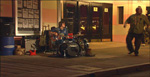 Synopsis  Reviews 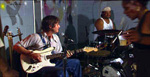 In Depth 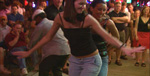 Home |
Audience Comments
"WOW! Excellent, grooving, spell binding! I need more!" "What a dynamic subject, and what an effective documentary! Jessie Mae Hemphill was adorable, and the whole thing was just charming and inspiring, and made you want to go out and dance." "The music is great and the interviews are even better. Love seeing R.L. Burnside on screen. On top of that there is a lot of skill in the filmmaking." "I felt like I had been to the juke joint and Beale Street for sure!" "The documentary about Richard Johnston moved my soul. I actually got up and danced for the first time in many a year." "I was entranced, amazed, and astounded! It was a religious experience!" "I found myself glued to every chord and word. Thanks for the introduction to Richard Johnston and his music." "The documentary caught the blues and the culture they were born in. Thanks for delivering that to us in a clean and honest fashion." "I had not heard of Hill Country blues before the documentary. It's been years since I was so moved by new music. This music is amazing!" "I was mesmerized. Thanks for educating me about Richard Johnston and his mentors." "It's hard to put into words how Richard Johnston's music makes me feel inside. Now that I've seen the way other people react to it in the documentary, that about sums it up!" "It was like discovering music all over for the first time! I have never heard music I liked as well as what I heard in this documentary!" "Your documentary is a good presentation of a part of our country's culture that many people do not get to see." "Unbelieveable... Just unbelievable."
Media Reviews
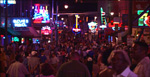
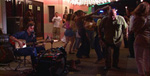
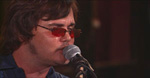
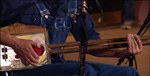
MishMash Music Reviews wrote: This is the mesmerizing story of Richard Johnston, a one-man band blues street musician who has ignited a new spark in the world of Southern blues. The film shows Johnston in his element, playing on the sidewalk on Beale Street in Memphis, singing into a microphone, strumming his guitar, and playing drums with his feet. It's an amazing performance, and by the size of the audience, he is obviously a crowd pleaser. The film traces Johnston's music-making history, starting from his early days playing in Junior Kimbrough's juke joint in Mississippi. There he learned how to play in the style of north Mississippi blues, honing his chops in the so-called "Hill Country" to play his music in a self-described "trance"-like fashion. From there, Johnston has taken this unique sound from the backwoods of Mississippi to the rest of the world, as he has graced stages all over the globe. The added bonus is the nature of his performance, being that it is unusual to see a middle-aged white man playing gritty blues songs in such an honest and genuine way --- especially in a one-man band format. It's an odd sight to see, and the fact that he's so good at it makes it even better. The documentary features interviews with Johnston, along with interviews with a couple of his blues inspirations; Jessie Mae Hemphill, and R.L. Burnside. There is also a wealth of performance footage, showing Johnston doing what he does best. The film is now making the festival circuit, with plans for it to be released on DVD in the near future. Severo Avila of the "Rome News-Tribune" wrote: Out of the documentary feature category in the Rome International Film Festival comes a film that follows Richard Johnston’s ferocious one-man-band performances. In his film, “Richard Johnston: Hill Country Troubadour,” director Max Shores gives us a glimpse at an extraordinary life. “When Richard Johnston performs, jaws drop in amazement,” Shores said. “He sings, plays guitar and plays drums with his feet. One of his guitars is made from a cigar box and broom handles.” Shores said the first time he saw Johnston perform, he knew a film about him would touch many people. “It’s hypnotic music that gets under your skin and won’t let go,” Shores added. “I’ve had the wonderful experience of presenting this film at several film festivals and the audience reaction has been enthusiastic everywhere.” “Richard Johnston: Hill Country Troubadour” will be screened in The Forum’s Riverwalk room on Saturday at 5 p.m. Mike Brantley of the "Mobile Register" wrote: See a man on the street every night, and you might get the idea he's homeless. In a way, that's why bluesman Richard Johnston can be seen and heard on Beale Street in Memphis, Tenn. You see, his music was at home in Chulahoma, Miss., at Junior Kimbrough's Juke Joint. Then the Juke Joint burned down, and Johnston was on the street. "I've played at blues festivals around the world," says Johnston in the documentary about him that's playing again tonight on Alabama Public Television, "but since the Juke Joint burned down, nothing compares to playing on the street." Usually, a bluesman may start out playing in the street, then graduate to playing clubs. It's not that way with Johnston. Says one voice in the documentary, "Richard Johnston: Hill Country Troubadour," Johnston is too good for the clubs. Johnston is so good, in fact, that in 2001 he won first place as well as the award for most promising musician at the International Blues Competition. "I've never been one to play by the rules, and it took a long time to find my place in the world," says Johnston in Max Shores' documentary, which was made under the auspices of the University of Alabama's Center for Public Television and Radio. A native of Houston, the Texan found "inspiration all around" when he was up and coming. Everybody, it seemed, wanted to be in a band, but Johnston actually went off and led the life. He spent some time in New Orleans, joined the Navy, went to college in California and even lived for a time in Japan. Eventually, he found his way to a little out-of-the-way joint in Chulahoma where he found the sound that excited him: hill country blues. "Usually with the blues, you are playing something that was written 50 years ago," Johnston says. "You're not in the juke joint it was written around. You are not feeling the power of the originators, you know? But it was like this whole hill country thing was fresh. The American people are just finding out about it. I was no different. I just bumped into it around '97. It was probably the most beautiful thing the world ever gave me." When he's not playing a festival -- because he rarely plays clubs -- Johnston more often than not can be found making his music on Beale Street. Tonight, for an encore of the program that premiered in the spring, he can be found on Alabama Public Television. When "Hill Country Troubadour" was shown at the Weatherspoon Art Museum in Greensboro, North Carolina, as a part of their Juke Joint Film series, Jordan Green of "YES! Weekly" had this to say: The Mississippi juke joint holds a special place in the popular imagination as a source of danger, mystique and authentic folk expression. For Memphis bluesman Richard Johnston, it served as his crossroads, the mythical place from which his predecessor Robert Johnson emerged with stunning virtuosity on the guitar after fellow players told him to get lost. Johnston is the subject of a new documentary movie produced by the University of Alabama Center for Public Broadcasting called Richard Johnston: Hill Country Troubadour. For a musician born in the mid-’60s who was living out of his van not many years ago, it’s somewhat surreal to see his career frozen in a documentary and shown at UNCG’s Weatherspoon Art Museum. Most people who have never set foot in a juke joint probably only understand the word ‘juke’ as a reference to the quaint machines that play 45 rpm records with the deposit of coins. According to the Oxford English dictionary, the word is actually derived from the Gullah word ‘joog,’ which is probably in turn derived from a West African word meaning to live wickedly. It’s also strikingly similar to the word ‘jouk,’ which means a sudden, elusive movement and a place into which one may dart for shelter; a shelter from a blow, a storm, etc. all fitting meanings for a place designed to allow moments of transgression to people who live otherwise oppressed lives. "A big part of a voodoo ceremony is dancing to relieve the stress," guitar player Johnston tells director Max Shores. "I’m talking about in a good way to not be afraid to act like the animal you are." He goes on to say about Junior Kimbrough’s juke joint, where he received his blues education: "Junior’s was a place people went to get transformed out of structured music to unstructured music." The fact that Junior’s burned down after Johnston spent about two years fronting the house band only serves to burnish its mythical status in the film. Hill Country Troubadour, then, alternates between scenes from The Lounge in Holly Springs, a representation of the abiding blues tradition in the north Mississippi hill country and scenes from Johnston’s one-man-band gig in front of a theater on Memphis’ Beale Street with its hoards of tourists representing the wider appeal of the blues. In both settings, Johnston’s primal drone is received by audiences that move as if possessed. On the street, where tourists snap pictures with digital cameras, as in the juke joint, audience members writhe on the ground, shake their bodies in place, or hop and spin in syncopated rhythm to the music. Return to top menu a documentary by Max Shores |